
By David Feight, GSAC Board Member
Submit questions or feedback online
GSAC receives more email inquiries on the beach-walk every month than on any other topic. So, we will try to answer some of those questions here.
As a starting point, and where there seems to be confusion, GSAC has no ownership interest in the beach-walk and thus has no governing authority or financial interest.
The beach-walk is private property that is owned and governed by a series of 5 Commons associations that are made up of the condominiums on the west side of Gulf Shore Blvd North in Park Shore.
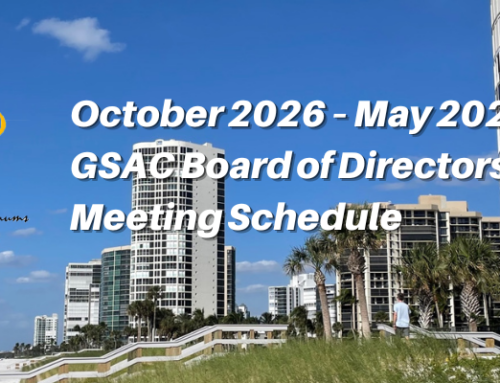
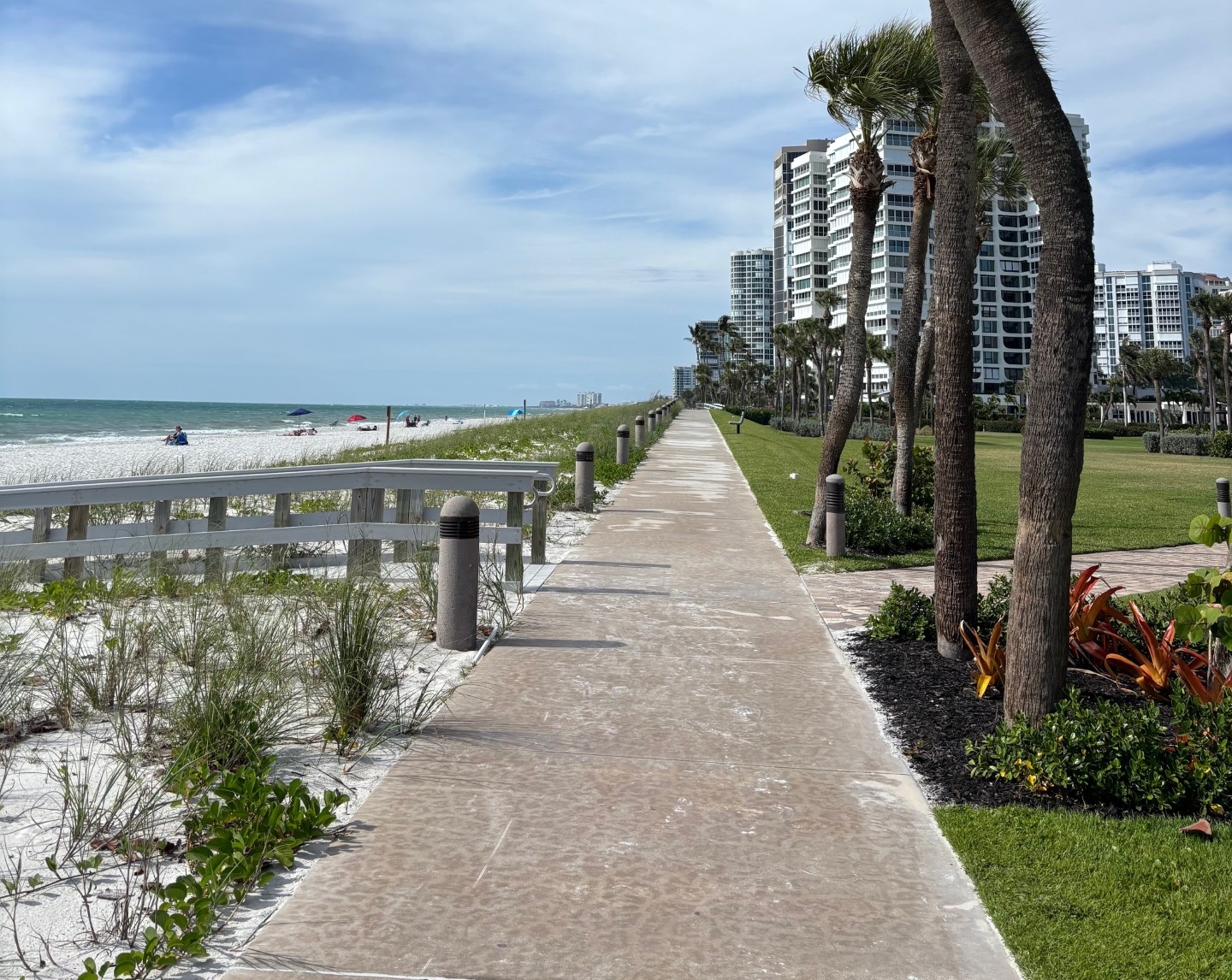
The Promenade, or beach-walk as it is called, is a 1.2 mile concrete walkway along the beach that stretches from Horizon House condominium on the south to LeParc on the north. It was designed and constructed by the Lutgert Company in the early 1970’s as part of their master development of condominiums on Gulf Shore Blvd North in Park Shore for the enjoyment of the condo owners and guests.
Over the years, the Commons, each of which has a board of directors, have worked together to maintain the beach-walk and enhance adjacent landscaping and parks to make it a truly impressive, elegant amenity for the nearly 2,000 condominium owners. There is nothing else like it in the City of Naples.
For over 50 years, the beach-walk survived intact. That changed with Hurricane Ian in 2022. With a 14-foot storm surge, the concrete didn’t withstand the pounding waves. In many areas, it was destroyed, and the surrounding dunes and landscaping were severely damaged. Hurricanes Milton and Helene in 2024 compounded the problem.
Since the beach-walk is privately owned, the cost of reconstruction was funded by assessments on the surrounding condominium unit owners. Overall expenses were well over $15 million and included reconstructing the beach-walk, dunes, plantings, irrigation, and lighting.
None of the recovery was easy or quick. Florida Department of Environmental Protection (Fl DEP) and City permits were required. Coastal engineers, civil engineers, and landscape architects were retained to guide the process. The new concrete structure was strengthened. Lighting bollards had to be turtle-friendly. Landscape materials, including sea oats and railroad vine, were selected because of their ability to hold back sand and help rebuild the dune. In addition, underneath the northern half of the beach-walk, there were huge perforated pipes that were part of a sophisticated stormwater management system that required cleaning out. Plus, work had to be done with regard to the turtle nesting season.
Now, after almost 4 years, much of the area has been returned to its previous beauty and is again being enjoyed by its owners and guests.
However, there is still work to be completed on the southern area. Much of that will be done this year.
As the Commons look ahead, there is a study underway to determine how the beach-walk and surrounding areas could be more resilient and protect upland properties. With increasing hurricane activity and sea level rise, resiliency is a high priority for the City of Naples and the Commons.